


If you’ve ever looked at your policy and thought, ‘I’m fully covered,’ you aren’t alone. It’s a phrase we hear every day in our office. But in the insurance world, ‘full coverage’ is actually just a nickname for a specific set of basics—not a guarantee that every surprise is paid for. Before you head out on the 210 or the 5 freeway, let’s quickly clear up what that nickname actually covers and, more importantly, what it usually leaves out.
Understanding “Full Coverage”
When most people refer to “full coverage,” they are usually talking about a combination of three main types of auto insurance:
Liability Insurance
This is the legal requirement. It pays for the other person’s repairs or medical bills if you’re at fault. It doesn’t cover your own vehicle or injuries.
Collision Insurance
This type of insurance covers damage to your car resulting from a collision with another vehicle or object, regardless of who is at fault.
Comprehensive Insurance
Comprehensive insurance covers damage to your car from non-collision events, such as theft, vandalism, or natural disasters.
While these three types of coverage form a solid foundation, they don’t encompass everything. “Full coverage” doesn’t automatically include additional protections that might be crucial for your needs.
The “Hidden” Gaps (What’s often missing)
Rental Reimbursement
If your car is in the shop for two weeks after an accident, how are you getting to work? Without this specific add-on, the cost of a rental comes out of your pocket.
Roadside Assistance
Flat tires, lock outs, and dead batteries don’t care if you have “full coverage.” This is almost always included separately.
Gap Insurance
If you have a loan or lease on your vehicle, gap insurance can cover the difference between what you owe and the car’s actual cash value if it’s totaled. This is another coverage that isn’t included in the “full coverage” myth.
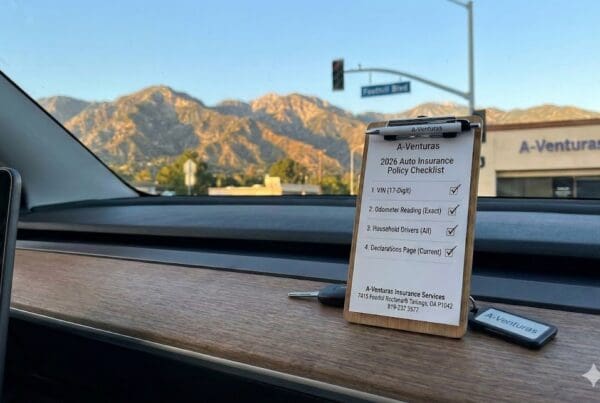
The 5 Minute check up
It’s essential to review your insurance policy’s declarations page to understand exactly what coverages you have. This page outlines the specific protections included in your policy and can help you identify any gaps in coverage. By doing so, you can make informed decisions about additional coverages that might be beneficial for your situation.
At A-Venturas Insurance Services, we’re here to help you navigate the complexities of auto insurance. Whether you have questions about your policy or want to explore additional coverage options, don’t hesitate to reach out to us. Our team is ready to assist you in ensuring you have the protection you need.